Mid Century Modern Yard Design Ideas: Stylish Outdoor Living Inspiration
Table of Contents
ToggleA mid-century modern yard is more than a nostalgic nod to the past—it’s a refined, functional, and effortlessly stylish outdoor space that merges classic lines with modern utility. As homeowners increasingly look to integrate outdoor areas into their everyday living, the principles of mid-century modern design offer the perfect blend of structure, simplicity, and nature.
Understanding Mid-Century Modern Yard Design
Mid century modern design emerged between the 1940s and 1970s, focusing on clean lines, organic curves, and integration with nature. When applied to a yard, it emphasizes geometric layouts, functional outdoor furniture, and a seamless indoor-outdoor flow. This approach often incorporates native plants, minimalist pathways, and carefully chosen accents like fire pits or fountains.
These yards typically feature open-plan layouts that echo the interior of the house, using structural elements like concrete slabs, wood decking, or gravel to create zones. Mid-century yards avoid clutter, relying instead on intentionality in placement and purpose—every element serves both a visual and functional role.
Key Features of a Mid-Century Modern Yard
-
Geometric Hardscaping: Clean-lined pavers and patios with right angles or symmetrical curves form the skeleton of the space.
-
Minimalist Planting: Succulents, ornamental grasses, and native shrubs add low-maintenance greenery.
-
Functional Zones: Spaces are divided for dining, lounging, or gathering, often delineated with changes in materials.
-
Natural Materials: Wood, stone, and metal are prominently used to reinforce a timeless feel.
-
Color Palettes: Earth tones and bold mid-century hues (mustard, teal, burnt orange) are used in planters, furniture, or accent features.
Real-World Examples of Mid-Century Modern Yard Concepts
1. Mid-century concrete slab path with gravel joints
Case Study: Symmetry in Motion – Los Angeles Home
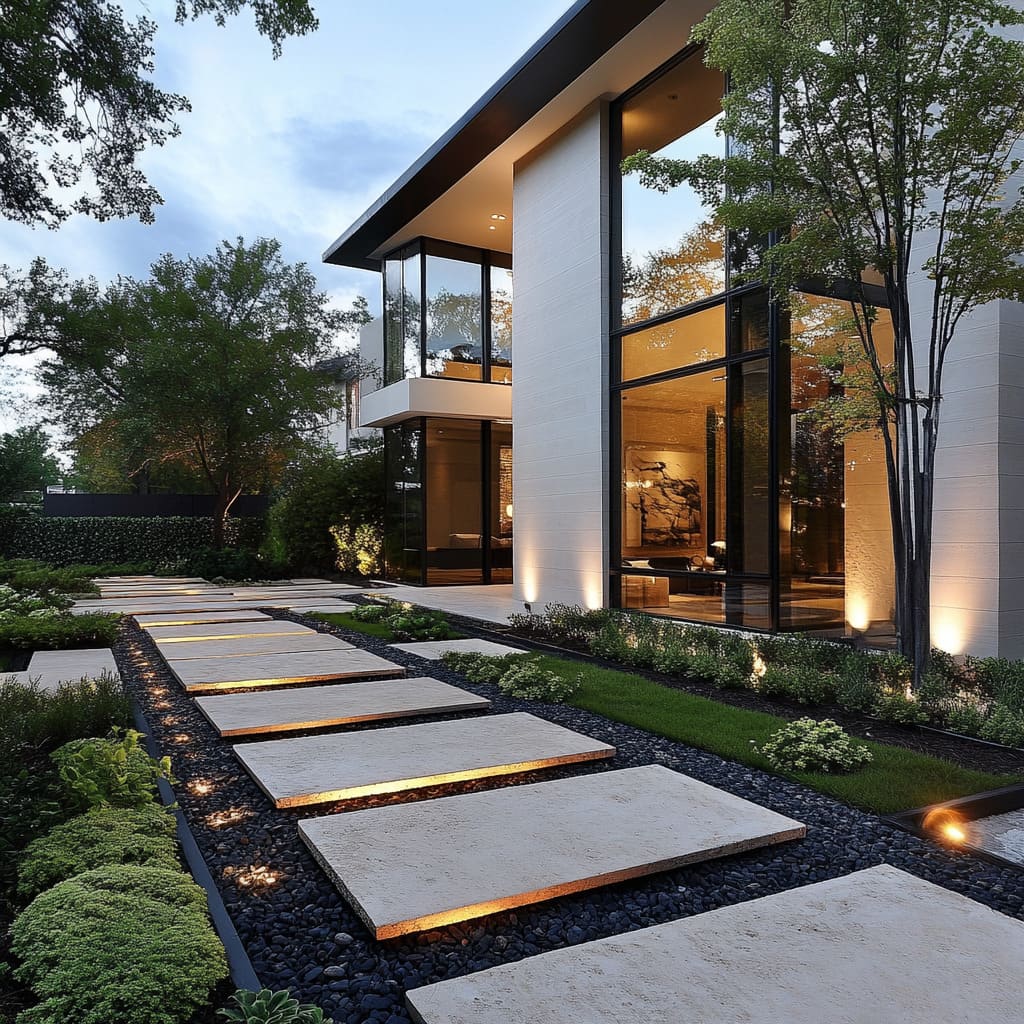
This backyard renovation in Los Angeles demonstrates the power of repetition and balance. Large rectangular concrete slabs are laid in a grid across gravel beds, creating a sleek walkway to a minimalist lounge area. The gravel not only adds contrast but also facilitates drainage.
A few low-slung chairs in teak wood surround a circular fire pit, showcasing the interplay between straight and curved lines—a core principle of mid-century aesthetics. Succulents and ornamental grasses border the space, keeping the greenery subtle and sculptural.
2. Built-in bench with breeze block wall

Case Study: Private Oasis – Palm Springs Retreat
Mid-century modern design thrives in desert climates, and this Palm Springs yard takes advantage of it. A breeze block wall not only offers partial privacy but casts intriguing shadows throughout the day. A custom-built concrete bench adds permanence and clean visual lines to the seating area.
Cacti, agave, and decomposed granite complete the picture, forming a low-water-use landscape that stays consistent with the era’s utilitarian mindset. The result is a low-maintenance yet highly visual outdoor living space.
3. Elevated wood deck with built-in planters
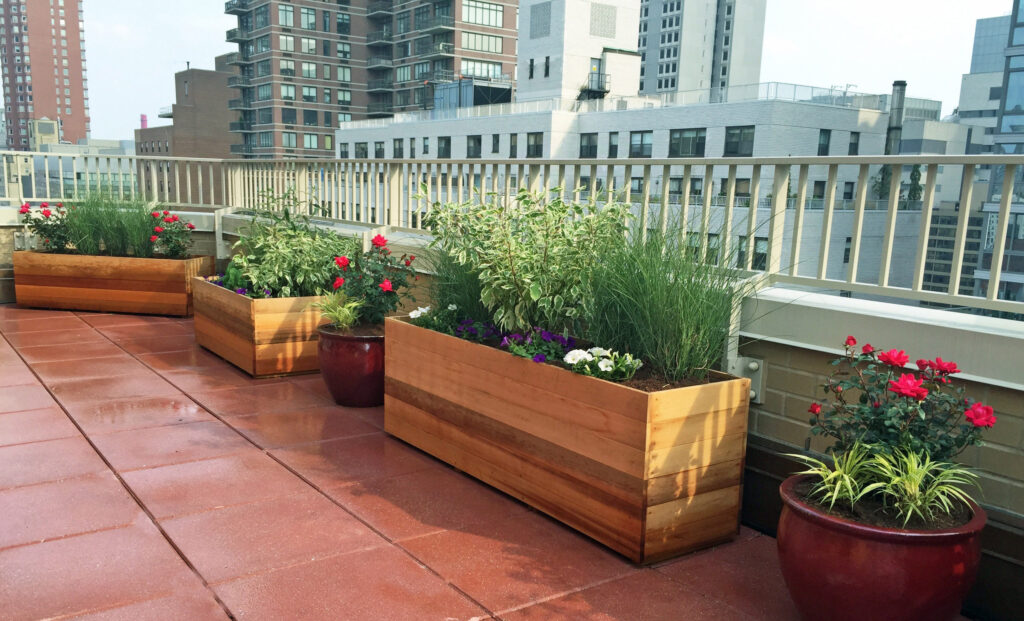
Case Study: Elevated Flow – Midwestern Deck Garden
In a climate less associated with mid-century design, this Midwestern backyard combines regional needs with the style’s essence. A raised cedar deck uses built-in planters to integrate greenery into the architecture. This elevates the space and connects the natural environment with the structural.
Planters follow geometric outlines and include Japanese maple trees and hostas—soft, organic shapes against the sharp deck design. Outdoor lighting hidden within deck panels casts a gentle glow, enhancing nighttime functionality without disrupting the aesthetic.
4. Slatted wood fence with modern patio furniture
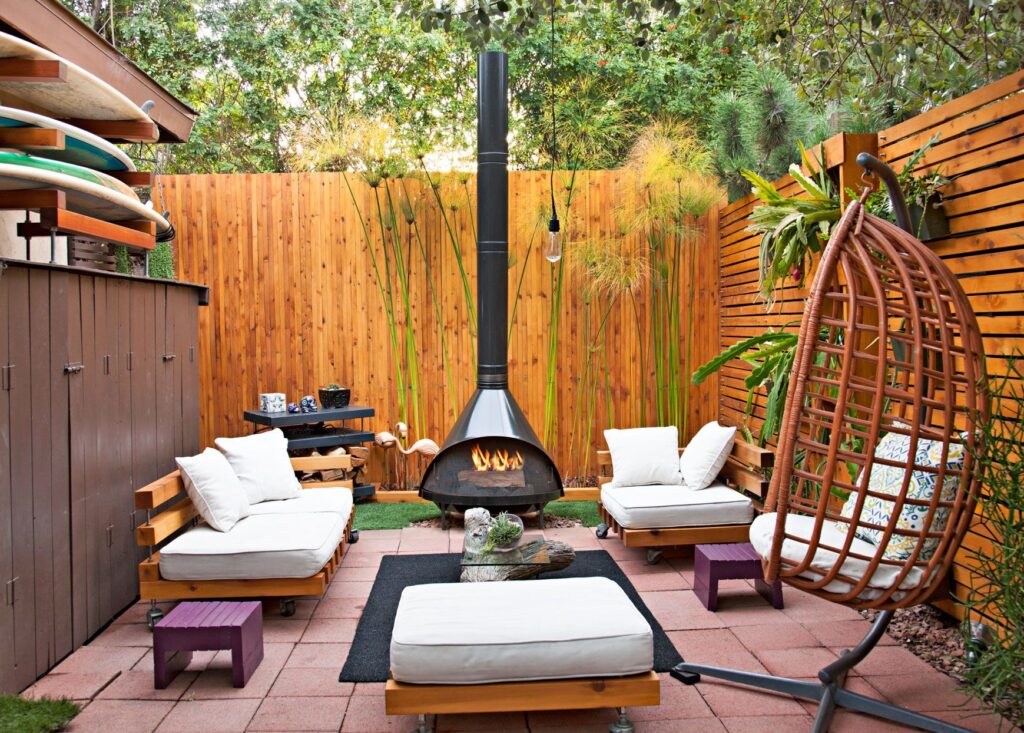
Case Study: Suburban Simplicity – East Coast Home
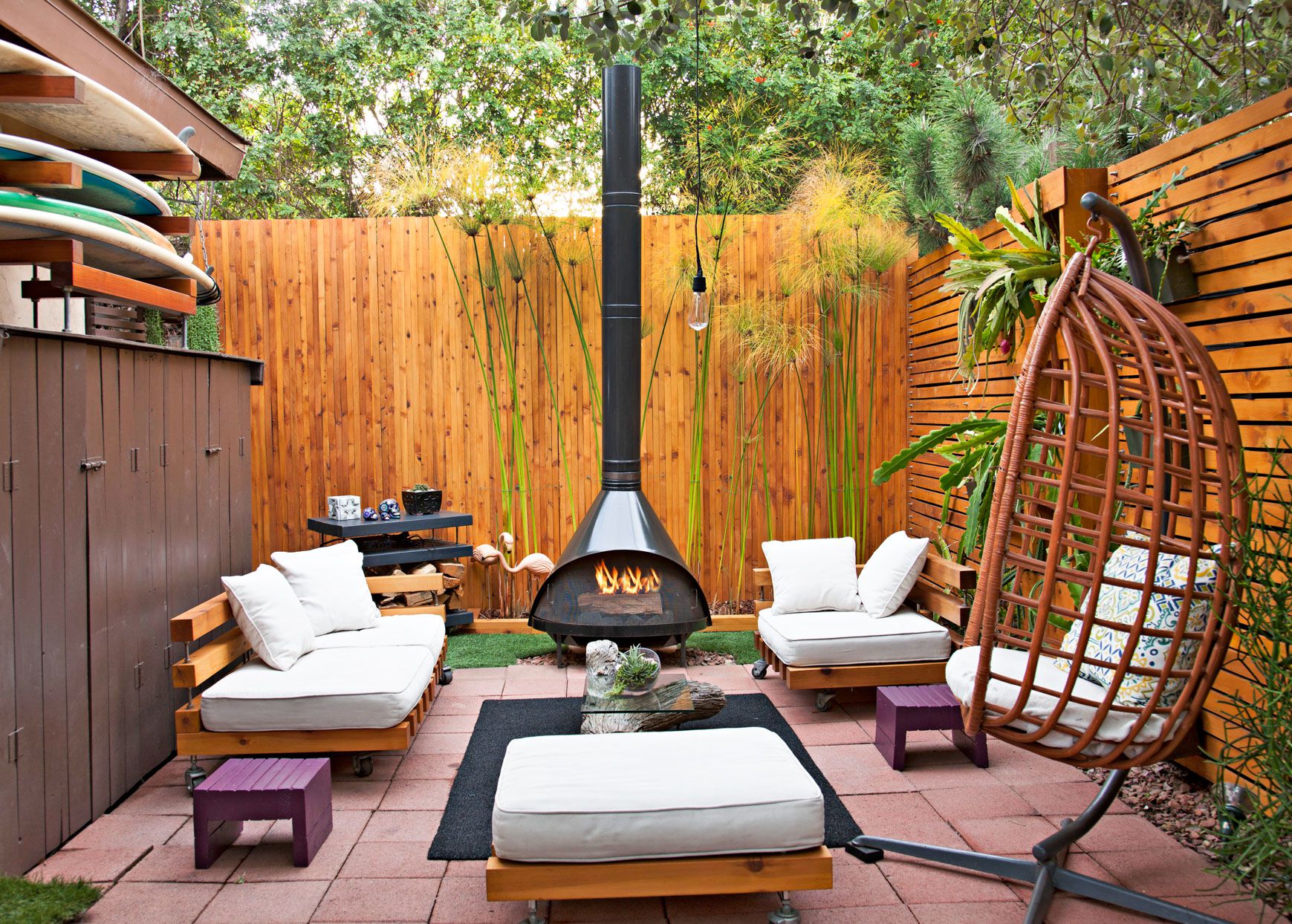
This suburban yard uses horizontal wood slats for fencing—a direct reference to mid-century architecture. Paired with modern low-profile patio furniture in neutral tones, the space becomes a quiet escape.
Rather than overplanting, the yard features trimmed hedges and circular stepping stones, drawing the eye inward. The minimalist setting provides a perfect frame for functional outdoor gatherings or tranquil solo evenings.
The Role of Technology in Mid-Century Modern Yards
While mid-century design is rooted in vintage aesthetics, modern technology plays a quiet but vital role in enhancing functionality.
Smart Lighting Systems
Insert image of the product: Pathway with embedded solar LED lights
Mid-century yards benefit from integrated low-voltage lighting that can be programmed or solar-powered. This allows the design to maintain a clean look during the day while providing usability and ambiance at night. Smart systems can be connected to mobile apps for custom scheduling and brightness levels.
Automated Irrigation
Mid-century yards often emphasize drought-tolerant landscaping, but even hardy plants need care. Drip irrigation systems controlled via smart hubs ensure each plant receives the right amount of water, ideal for maintaining gravel beds or container gardens without manual effort.
Outdoor Sound Integration
Modern sound systems designed for outdoor use can be built into planters or hidden in hedges. These audio solutions support the clean visual field required by mid-century design while offering high-quality sound for gatherings or solitary relaxation.
Benefits of Adopting a Mid-Century Modern Yard Design
Simplicity with Purpose
Unlike overly complex landscape styles, mid-century yards focus on clean lines, intentional furniture, and simple plantings. This reduces visual clutter and maintenance demands, making the space more inviting and relaxing.
Enhanced Indoor-Outdoor Living
Mid-century yards extend your living space by creating outdoor areas that mirror interior comfort. This seamless connection is not just aesthetic—it promotes healthier lifestyles through fresh air and frequent outdoor use.
Environmentally Friendly Choices
Many mid-century yard designs rely on xeriscaping, native plants, and natural materials. These choices support sustainable living by reducing water usage and minimizing reliance on chemical treatments.
Long-Term Investment
Because mid-century modern design is considered timeless, it adds lasting value to a home. Unlike trend-driven landscaping, these yards age gracefully and appeal to a wide range of buyers if resale is a consideration.
Common Use Cases for Mid-Century Modern Yards
Entertaining Guests
With distinct zones and a minimalist layout, mid-century yards are ideal for hosting. Whether it’s a BBQ on the patio or an evening around the fire pit, the space naturally encourages interaction while maintaining flow.
Daily Relaxation
Many homeowners use their yards for unwinding. The symmetry, simplicity, and thoughtful lighting in a mid-century design can transform an outdoor area into a personal retreat.
Gardening with Style
Raised beds, built-in planters, and low-maintenance flora allow homeowners to engage with gardening in a clean, structured manner. This makes yard work feel less like a chore and more like a curated activity.
Visual Continuity with Mid-Century Homes
For owners of Eichler, ranch, or similar architectural styles, a mid-century modern yard completes the visual story. It enhances curb appeal and reinforces the design language of the home.
Frequently Asked Questions (FAQ)
What are the best plants for a mid-century modern yard?
Succulents, ornamental grasses, agave, yucca, cacti, and clipped shrubs are all ideal. These plants provide structure, low maintenance, and complement the minimalist style.
Can I apply mid-century modern principles in small yards?
Absolutely. Focus on geometric paths, built-in seating, and a simple color palette. Even small patios or balconies can benefit from mid-century elements like breeze blocks or modular furniture.
Is mid-century modern outdoor design expensive?
It depends on the materials and level of customization. Using natural materials and low-maintenance plants can reduce long-term costs, and many mid-century designs emphasize simplicity over excess.