Modern Concrete Backyard Design Ideas: Smart, Minimalist, and Sustainable Outdoor Living
Modern concrete backyard design is rapidly transforming how we view outdoor spaces. No longer limited to plain patios or driveways, concrete has become a staple material in cutting-edge backyard landscaping due to its versatility, clean aesthetic, and long-term durability. In 2025, homeowners and designers alike are embracing concrete for its ability to merge form with function, sustainability with style, and natural elements with architectural sharpness.
In this in-depth guide, we’ll explore what defines a modern concrete backyard, how technology enhances its function, and real-world examples that show just how beautiful and practical these spaces can be. Whether you’re planning a new build or renovating an existing backyard, this article provides valuable insight into making the most of this timeless material.
What Defines a Modern Concrete Backyard?
A modern concrete backyard is characterized by clean lines, minimal ornamentation, and the intentional use of concrete as a primary design element. It moves beyond traditional concrete slabs to include textured surfaces, custom shapes, integrated lighting, and seamless transitions between hardscape and softscape elements.
Rather than acting as a background element, concrete in a modern backyard plays a focal role. It’s often paired with contrasting materials like natural wood, metal, and stone to create depth and visual balance. From expansive patios and outdoor kitchens to custom fire features and vertical planters, concrete offers structural coherence while supporting minimalist aesthetics.
Because of its malleability, concrete can be cast into practically any shape, form, or texture. This allows for fully customized outdoor designs that reflect the architectural identity of the home and the lifestyle of its occupants.
1. Sleek Concrete Courtyard with Built-in Fire Pit
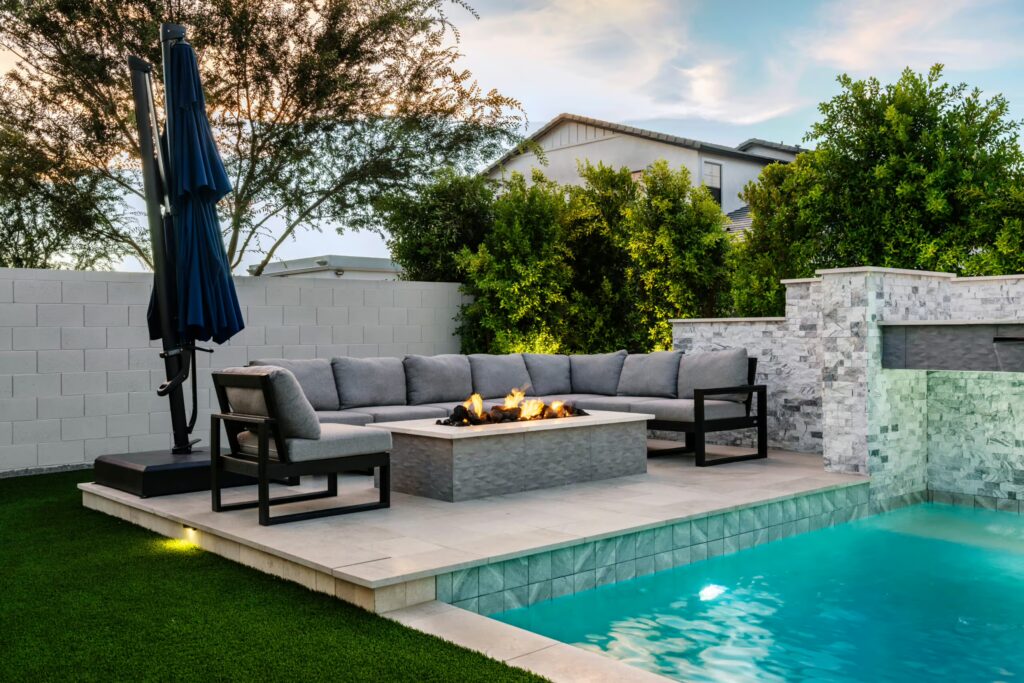
In a San Diego home, the backyard centers around a large, rectangular concrete courtyard. The smooth finish is lightly acid-washed for slip resistance and visual texture. At the heart of the space is a built-in linear fire pit made entirely from precast concrete.
The minimalist form of the fire pit aligns with the symmetry of the patio, and its integration into the flooring eliminates clutter from freestanding components. Low-profile seating surrounds the feature, allowing guests to enjoy warmth and ambiance in a stylish setting.
This project illustrates how concrete can be both functional and architectural, serving as a durable material while also enhancing the visual narrative of the backyard.
2. Modular Concrete Paver Garden with Grass Inlays
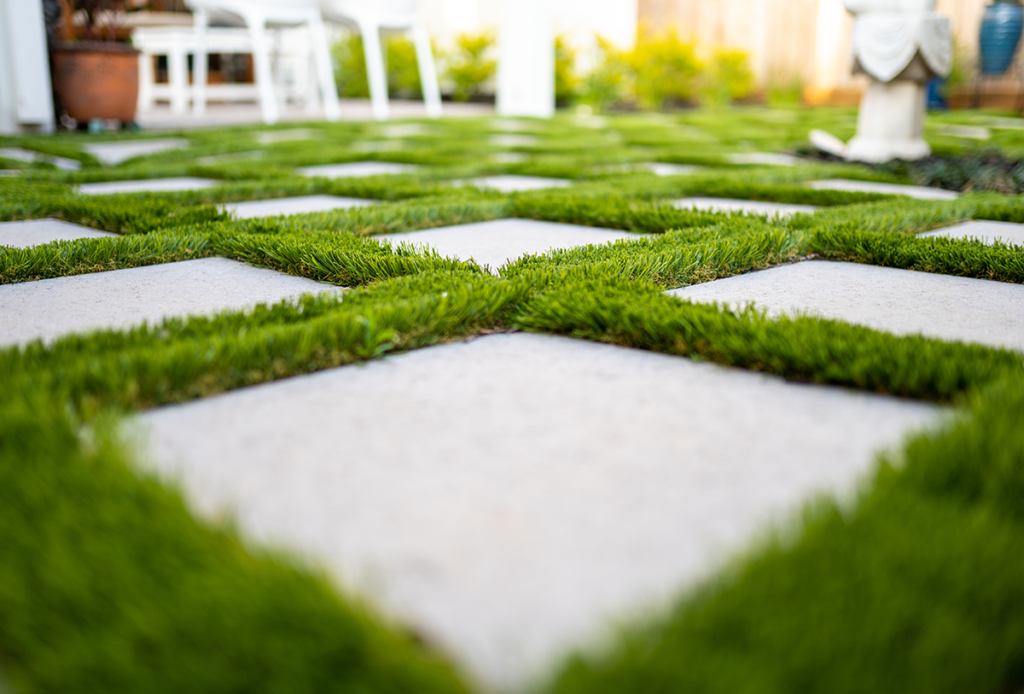
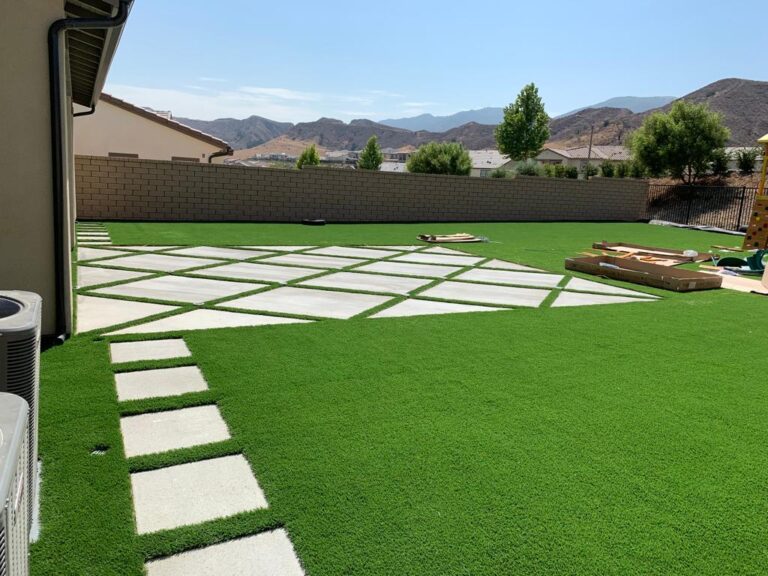
A residence in Portland, Oregon, uses large square concrete pavers arranged in a grid layout across the backyard. Each paver is separated by ground-level grass, allowing for water permeability and visual softness.
The geometry of the pavers creates a natural path throughout the garden while maintaining open green zones. The contrast between concrete and turf reflects a modern approach to sustainable landscape design—balancing organic with structural elements.
The modular design also simplifies maintenance, provides foot traffic durability, and integrates seamlessly into a low-water-use landscape plan. This combination of form and function makes it ideal for homeowners looking to reduce maintenance while retaining aesthetic appeal.
3. Cantilevered Concrete Bench with LED Underglow
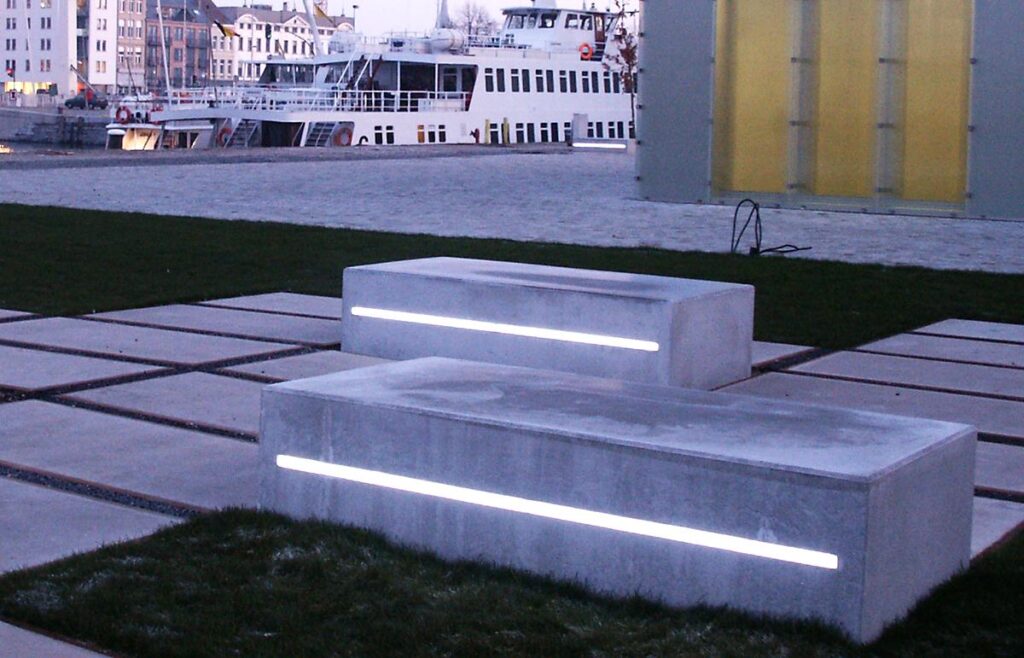
In an urban backyard in Chicago, a cantilevered concrete bench runs along the side of a raised planter bed. The bench is supported by hidden steel framing and hovers slightly above the ground. Integrated LED strip lighting installed beneath the bench provides a dramatic nighttime effect.
The floating effect enhances the modern vibe, while the concrete structure ensures that the seating is both permanent and weather-resistant. This installation showcases the sculptural possibilities of concrete and how it can be paired with technology for stunning visual outcomes.
The addition of ambient lighting also increases the usability of the backyard during evenings, turning it into an inviting lounge space with minimal overhead effort.
4. Stamped Concrete Patio with Seamless Outdoor Kitchen Integration
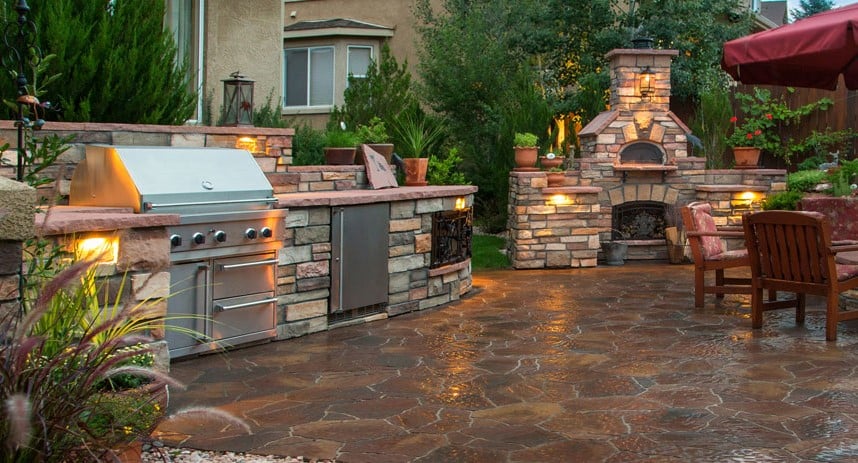
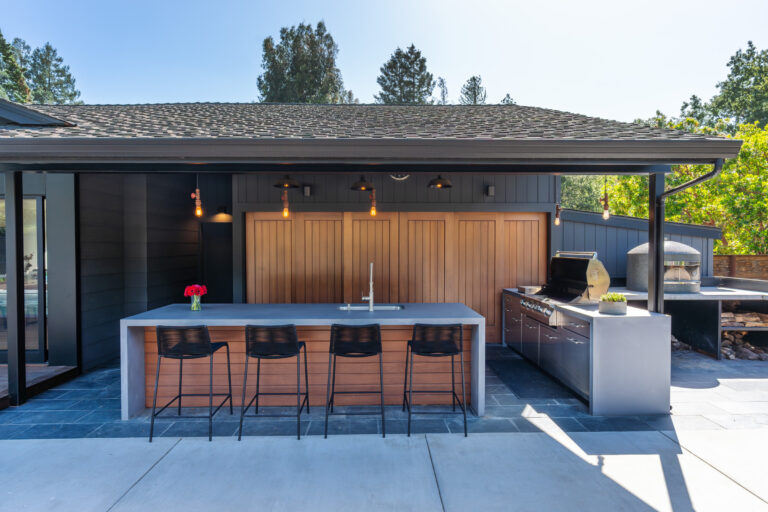
A modern backyard in Austin, Texas, features a stamped concrete patio that mimics the texture of slate stone but with a uniform color palette for a more modern feel. The patio extends into a fully functional outdoor kitchen area complete with countertops, grill base, and seating ledge—all constructed from poured-in-place concrete.
The seamless integration of cooking and lounging zones creates a unified space ideal for entertaining. The use of stamping adds subtle texture without compromising the minimalist look. This project demonstrates how concrete can adapt in both finish and form to meet the varying needs of modern outdoor living.
5. Vertical Concrete Wall with Recessed Planter Niches
A narrow backyard in San Francisco uses a vertical concrete wall as both a boundary and a design statement. Within the wall are built-in niches that hold potted plants, creating a living wall that softens the material’s hardness.
This space-saving solution maximizes vertical real estate while enhancing visual interest. The wall also acts as a privacy barrier, defining the backyard space in an elegant and modern way. The mix of concrete and greenery exemplifies the balance of industrial and organic found in many top-tier landscape designs.
Technology Benefits in Modern Concrete Backyards
Smart Lighting Integration
Concrete surfaces provide the perfect housing for embedded smart lighting systems. Whether installed under steps, within seating edges, or along pathways, these LED systems can be controlled through smartphone apps, motion sensors, or timers. This enhances both safety and atmosphere.
Heating Capabilities
Radiant heating systems can be installed under concrete patios, making them usable year-round. In colder climates, these systems prevent snow and ice accumulation. In transitional seasons, they add comfort for extended outdoor gatherings.
Water Management
Concrete is easily paired with permeable drainage systems. Linear grates, slot drains, and slope grading allow for efficient water runoff, especially in rainy regions. Some designs even incorporate rainwater harvesting into concrete planters or cisterns built into retaining walls.
Durability with Sustainability
Many modern concrete mixes include recycled materials like fly ash or crushed glass, reducing environmental impact. Long-lasting and low-maintenance, concrete eliminates the need for frequent replacements, making it a sustainable landscaping choice over the long term.
Use Cases: How a Modern Concrete Backyard Solves Real Problems
Urban Noise and Privacy
Tall concrete walls and planters can act as sound barriers in noisy cities. When strategically placed, they absorb and deflect unwanted noise from roads or neighboring properties. They also provide visual privacy without requiring constant upkeep.
Space Maximization in Small Yards
In compact urban backyards, concrete is often used to build multi-functional elements like raised beds that double as seating, retaining walls that also serve as boundaries, or outdoor tables anchored into the patio slab. These reduce clutter and keep the yard visually open.
Fire and Water Safety
Concrete’s non-combustible nature makes it ideal for fire pits and grilling areas. Unlike wood or plastic materials, it doesn’t burn or melt. Similarly, in poolside settings, slip-resistant finishes improve safety around water features without detracting from the modern aesthetic.
Low-Water Landscaping
With climate change and water restrictions in many regions, modern concrete backyards can reduce or eliminate the need for traditional turf. Pairing concrete with native plants, gravel, and efficient irrigation creates an eco-friendly solution for dry climates.
Outdoor Entertaining and Multifunctionality
Modern backyards often act as extensions of indoor living spaces. Concrete patios, kitchens, and seating areas offer permanent structures that support dining, relaxing, or working outdoors. Built-in elements reduce reliance on furniture and help define zones within the space.
Frequently Asked Questions About Modern Concrete Backyards
Is concrete a sustainable choice for landscaping?
Yes. When used thoughtfully, concrete is highly sustainable. Its longevity means fewer replacements, and modern mixes can include recycled content. When paired with water-saving landscaping and permeable surfaces, it supports both durability and eco-responsibility.
Can concrete be customized to match a specific design style?
Absolutely. Concrete is one of the most customizable materials in landscaping. It can be colored, stamped, polished, or left raw. It also pairs well with wood, stone, steel, and greenery, making it adaptable to a range of styles from ultra-modern to industrial chic.
Does a concrete backyard require a lot of maintenance?
No. Once sealed, concrete is very low maintenance. It may need occasional cleaning and resealing every few years, depending on exposure. Unlike wood, it doesn’t warp or rot, and unlike pavers, it doesn’t require regular weed control between joints.